Finding bats roosting in your attic is unsettling, but timing your response matters just as much as your decision to act. Indiana law restricts bat exclusion to specific times of year, and getting this wrong doesn’t just risk a fine—it can trap helpless pups inside your walls, creating a far bigger problem than the one you started with.
Property owners often want bats gone the moment they’re discovered, but Indiana’s bat exclusion laws exist for good reason. The state is home to several protected bat species, including the federally endangered Indiana bat, and their maternity season overlaps with the warmer months when most homeowners notice the problem in the first place.
This guide walks through exactly when bat exclusion is legal in Indiana, why the timing matters so much, and what steps to take if you discover bats outside the approved window.
Bat Biology and Indiana’s Climate
Bats in Indiana follow a predictable seasonal rhythm shaped by temperature and reproduction. Understanding this cycle explains why exclusion timing is so tightly regulated.
In late winter and early spring, bats emerge from hibernation and begin searching for summer roosting spots—often attics, soffits, chimneys, and wall voids. By late spring, female bats gather into maternity colonies to give birth, typically to a single pup each.
Those pups can’t fly for several weeks after birth. During this stretch, mothers leave the roost nightly to feed while their young remain behind, completely dependent and immobile. This is precisely the period when exclusion becomes dangerous: seal an entry point while pups are inside, and the mothers’ nightly departures do nothing but abandon their young to die in place.
By late summer, young bats have matured enough to fly and forage on their own, and the colony becomes mobile again. This shift is what opens the door to safe, legal exclusion.
The Best Time to Exclude Bats in Indiana
Indiana offers two safe windows each year for bat exclusion, separated by a legally restricted maternity season.
Spring Exclusion (March–April)
Early spring, before maternity season begins, is one of the safer times to exclude bats. Colonies haven’t yet given birth, so there’s no risk of trapping flightless pups. This window tends to be shorter and less predictable than fall, since bat activity depends on how quickly temperatures warm up each year.
Fall Exclusion (Mid-August–October)
Most wildlife professionals consider late summer through fall the ideal time for bat exclusion in Indiana. Once maternity season ends, young bats can fly and leave the roost under their own power, and there’s little risk of separating dependent pups from their mothers. This window also gives homeowners time to complete exclusion and sealing work before bats begin seeking hibernation sites for winter.
Why Winter Exclusion Is Risky
Excluding bats between November and February might seem safe since maternity season has long passed, but it introduces a different problem. Bats may already be hibernating inside a structure by this point, and sealing entry points can trap them inside walls or attic spaces, where they’ll die and create lingering odor and contamination issues. Wildlife professionals generally avoid exclusion work during these cold months for this reason.
Legal Requirements and Regulations
Indiana’s exclusion rules aren’t arbitrary. Several bat species found across the state, including the Indiana bat, are protected under both state law and the federal Endangered Species Act. Disturbing, harming, or excluding these species during restricted periods is illegal for homeowners and wildlife control operators alike.
The widely cited restricted period for bat exclusion in Indiana runs from May 15 through August 15, covering the core of maternity season. During this window, exclusion work of any kind is prohibited, regardless of how minor or well-intentioned.
Beyond timing, only one-way exclusion is considered a legal and humane removal method in Indiana. Trapping entire colonies, using poisons, or attempting fumigation all violate state and federal wildlife protections. Licensed wildlife control operators are familiar with these requirements and can confirm what’s permitted for your specific property and situation.
Pre-Exclusion Preparation Steps
Just because exclusion work can’t happen during the restricted season doesn’t mean you’re stuck waiting with no options.
Identify Entry Points
Bats can squeeze through gaps as small as three-eighths of an inch, which is roughly the width of a pencil. Common entry points include ridge vents, soffit gaps, gable vents, and chimney gaps. Walking your property’s exterior and noting potential access points gives you a head start once exclusion season opens.
Conduct a Thorough Property Inspection
A professional wildlife inspection during the restricted season can map out active roosts, estimate colony size, and document existing damage without disturbing the bats. This groundwork means exclusion can begin immediately once the legal window opens, rather than starting from scratch in late August.
Consult With Wildlife Professionals
Licensed operators like Modern Wildlife Control in Indianapolis stay current on Indiana DNR guidelines and can advise on next steps even when active exclusion isn’t yet permitted. Getting on a professional’s schedule early is particularly important during the fall rush, when demand for bat exclusion services peaks.
The Exclusion Process
Once the legal window opens, professional bat exclusion follows a consistent, humane process.
One-Way Door Systems and Their Effectiveness
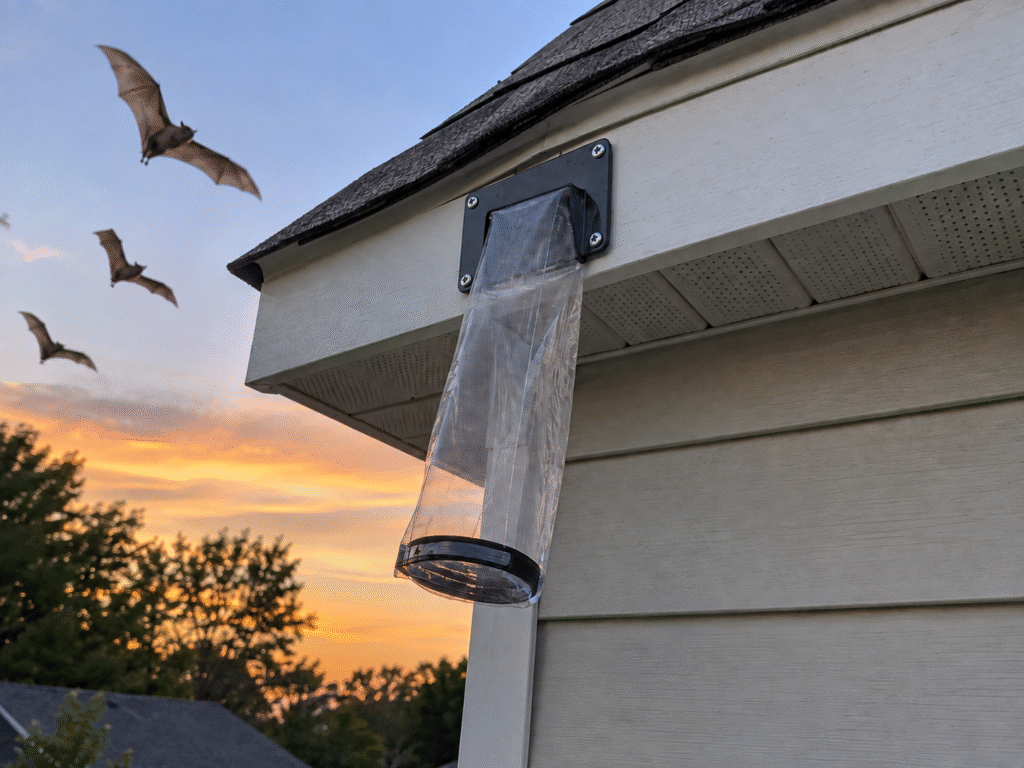
One-way exclusion devices—typically tubes or netting—are installed over active entry points. These allow bats to exit at dusk to feed but prevent them from crawling back in. This method is effective because it doesn’t rely on trapping or handling bats directly; the colony leaves on its own schedule.
Sealing Entry Points Properly
Once all bats have vacated, every entry point, both primary and secondary, needs to be permanently sealed using durable materials like steel mesh, caulk, or expanding foam. Skipping secondary gaps often means bats or other wildlife find their way back in within a season or two.
Timeline Expectations During Exclusion Season
Exclusion devices typically remain in place for five to fourteen days, depending on colony size and weather conditions, to confirm the entire colony has departed before final sealing begins. Homeowners should expect the full process, from inspection to final seal, to take a few weeks.
Common Mistakes to Avoid
- Excluding bats during maternity season. This is the single biggest and most consequential mistake, resulting in trapped pups and potential legal violations.
- Using harmful chemicals or traps. These methods are illegal for most bat species in Indiana and can cause unnecessary suffering.
- Failing to address all entry points. Sealing the obvious gaps while missing smaller ones often means bats return, undoing all the previous work.
Frequently Asked Questions
Can you exclude bats year-round in Indiana?
No. Bat exclusion is prohibited from May 15 through August 15 to protect maternity colonies. Exclusion is safest during spring (March–April) and fall (mid-August–October).
What happens to bats if you seal entry points in winter?
Bats may be hibernating inside the structure during winter months. Sealing entry points during this time can trap them inside walls or attics, leading to their death and creating odor and sanitation issues.
Do I need a permit to exclude bats in Indiana?
Because several bat species in Indiana are federally protected, exclusion work should follow Indiana DNR guidelines and be performed by a licensed wildlife control operator familiar with current regulations.
How long does the exclusion process take?
Once the legal window opens, exclusion devices typically stay in place for five to fourteen days to confirm the colony has fully departed, followed by permanent sealing of all entry points.
Timing Is Everything With Bat Exclusion
Indiana’s bat exclusion laws exist to protect a genuinely beneficial, federally protected species while giving homeowners a clear, legal path to reclaiming their property. The window between mid-August and October offers the safest, most effective opportunity to exclude bats for good, but preparation can start well before then.
If you’ve discovered bats on your property, don’t wait until the season is right to start the conversation. Modern Wildlife Control, serving Indianapolis, Indiana, can inspect your property, identify entry points, and build an exclusion plan so you’re ready to act the moment the legal window opens. Contact us today to schedule your inspection.
Related Posts:
Bat Maternity Season in Indiana: A Guide to Safe and Humane Removal
Unexpected Roommates: How To Deal With Bats In The Attic
How to Deter Bats From Entering Your Home