Squirrels look harmless enough scampering across your lawn or leaping between tree branches. But once they set their sights on your house, these small animals can cause big problems. From chewed wiring to damaged insulation, squirrel activity often leads to repair bills that far outweigh the cost of prevention.
The good news? Most squirrel damage is avoidable. With a few proactive steps, you can make your home far less appealing to these persistent critters and protect your property before problems start. Here’s what every homeowner should know about keeping squirrels out for good.
Signs of Squirrel Damage
Catching a squirrel problem early can save you from a much bigger headache down the road. Watch for these common warning signs:
- Chewed wood, siding, or roof edges. Squirrels have teeth that grow continuously, so they gnaw on hard surfaces to keep them worn down.
- Damaged insulation and electrical wiring. This is especially concerning, as exposed wiring poses a fire risk.
- Nesting materials in attics and walls. Leaves, twigs, and shredded insulation are telltale signs of a nest nearby.
- Entry holes near gutters and vents. Squirrels are surprisingly good at squeezing through small openings to gain access to your attic.
If you notice scratching sounds in your walls or ceiling, particularly around dawn and dusk, it’s worth investigating further before the damage spreads.
Seal Entry Points
The most effective way to prevent squirrel damage is to keep them from getting inside in the first place. Start by inspecting your home’s exterior for gaps, cracks, and openings. Squirrels can squeeze through spaces as small as a quarter of an inch, so don’t overlook small gaps around your roofline, fascia boards, or utility lines.
How to Seal Common Entry Points
- Caulk small openings under a quarter inch to prevent easy access.
- Install metal flashing around vulnerable areas like roof edges and eaves, since squirrels can chew through wood and plastic but not metal.
- Keep gutters clean and secure, as damaged or clogged gutters can create footholds and openings.
Trim Tree Branches
Overhanging branches act as a direct bridge between the surrounding trees and your roof, giving squirrels easy access to your home. Cut back any branches within six to eight feet of your roofline to eliminate this pathway. While you’re at it, remove dead or weak branches, as squirrels are drawn to unstable limbs for nesting material.
For added protection, consider installing metal tree guards around trunks near your house to prevent squirrels from climbing up in the first place.
Secure Your Attic and Vents
Attics offer squirrels warmth, shelter, and a safe place to raise their young, making them one of the most common entry points into a home. Cover all vents with hardware cloth or heavy-gauge metal mesh, since squirrels can chew through plastic and thin screening with ease.
If you already have squirrels in the attic, one-way doors allow them to leave without being able to return, giving you a humane way to reclaim your attic. Once they’re gone, seal any gaps around pipes, wiring, or vents where they might have entered.
Remove Food Sources
A yard full of accessible food is an open invitation for squirrels to stick around.
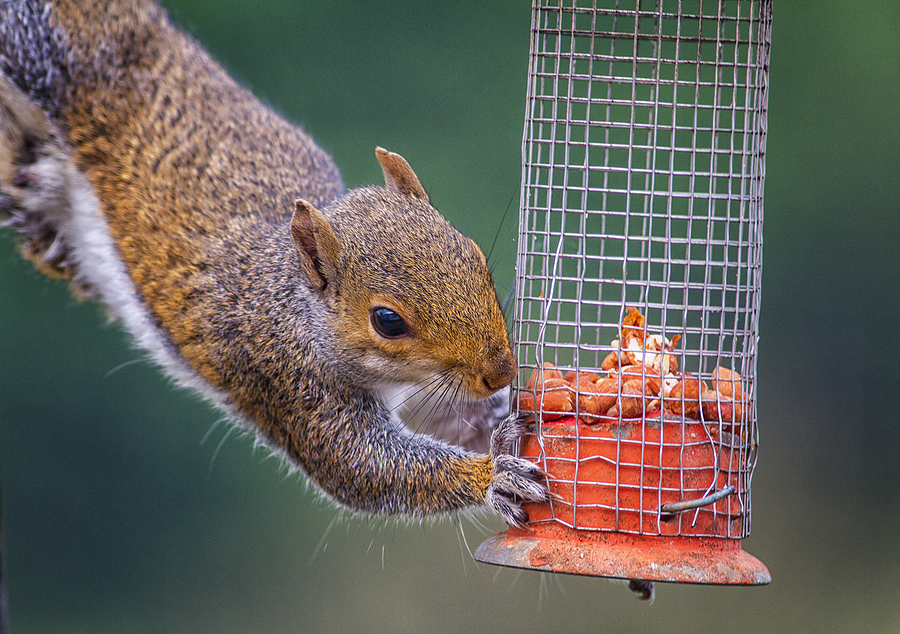
- Use squirrel-proof bird feeders designed to keep unwanted visitors out.
- Store garbage in sealed containers so food scraps don’t attract attention.
- Pick up fallen nuts and fruit regularly, especially during the fall months.
- Trim fruit-bearing trees away from your home to reduce both food access and roof contact.
Cutting off these food sources makes your property considerably less attractive to squirrels looking for an easy meal.
Install Chimney Caps and Screens
Chimneys are another common entry point that homeowners often overlook. Without a cap, an open chimney functions much like a hollow tree, which is exactly what squirrels look for when searching for a nesting spot.
Installing a properly fitted chimney cap prevents squirrels from climbing down into your home. Screening any additional openings, such as attic vents or gaps in the flashing, adds another layer of protection. Be sure to have caps and screens inspected periodically, since wear and tear can create new openings over time.
Frequently Asked Questions
How do I know if I have squirrels in my attic?
Listen for scratching, scurrying, or chattering sounds, particularly in the early morning or evening hours. Other signs include nesting materials, droppings, and visible entry holes near the roofline.
What time of year are squirrels most active?
Squirrels are most active during the spring and fall, when they search for nesting sites to raise their young or prepare for winter. However, they can invade homes at any time of year if food and shelter are available.
Are DIY solutions effective for squirrel prevention?
DIY methods like sealing gaps and trimming branches can help reduce risk, but they don’t always address the root cause of an existing infestation. Professional wildlife control services offer inspection, exclusion, and removal solutions built to last.
Protect Your Home Before Damage Adds Up
Preventing squirrel damage is far less costly than repairing it. A little effort now, like sealing entry points, trimming branches, and removing food sources, can save you from expensive repairs and health hazards down the road.
If squirrels have already found their way into your home, don’t wait for the problem to get worse. Modern Wildlife Control has helped homeowners across Indianapolis, Indiana protect their properties with expert inspections and lasting exclusion solutions. Call 317-847-6409 today to request your free quote and keep squirrels out of your home for good.
Related Posts:
How to Repair Squirrel Damage in Your Home
How to Keep Squirrels Out of Your Stuff
How to Protect Bird Feeders From Hungry Squirrels