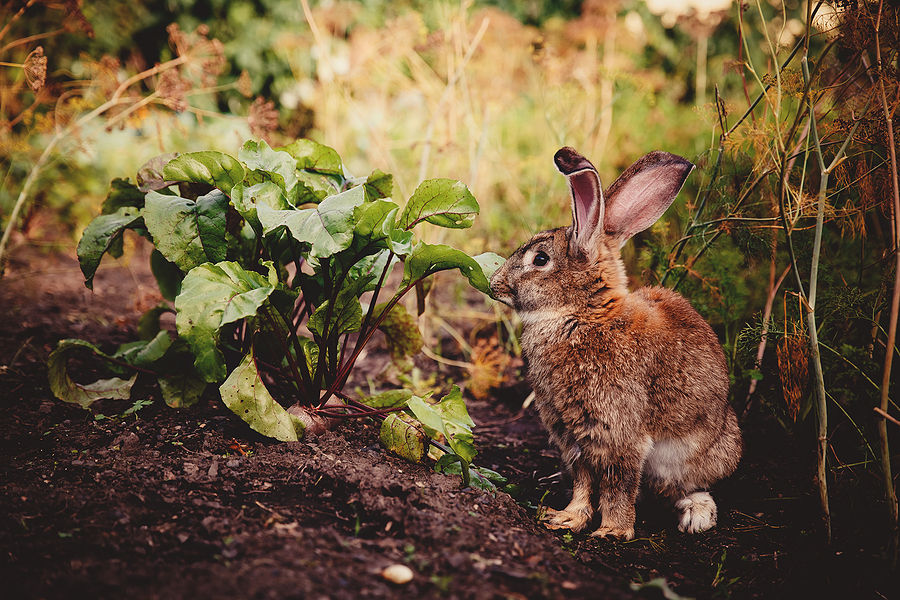
A few rabbits hopping through your yard might seem harmless at first. But if you’ve ever stepped outside to find your garden beds stripped bare or your young trees girdled at the base, you know how quickly these animals can shift from charming to costly.
Eastern cottontail rabbits are the most common nuisance species in Indiana. They’re prolific breeders—capable of producing up to six litters per year, with an average of six young per litter and a gestation period of just 28 days. That means a small rabbit problem can escalate fast. The good news? There are several safe, humane strategies that can protect your yard without harming the animals or your family.
How to Tell If Rabbits Are Damaging Your Yard
Before taking action, it helps to confirm that rabbits are actually the culprit.
Signs of Rabbit Damage
The most telltale sign is a clean, angled cut on plant stems—typically at approximately a 45-degree angle—made by the rabbit’s sharp incisors. Deer and other animals tend to leave torn or ragged edges. Rabbit damage also tends to occur close to the ground, usually within 12 to 18 inches.
Other signs include:
- Round pellets (droppings) measuring 3/16 to 7/16 inches in diameter, light brown in color
- Small oval tracks in mud or snow, with elongated hind prints roughly 3 inches long
- Gnawed bark on young trees and shrubs, especially during fall and winter when green vegetation is scarce
- Stripped garden beds, particularly early spring vegetables and flowering plants like tulips
Rabbit Behavior Worth Knowing
Eastern cottontails are most active at dawn, dusk, and overnight. They don’t typically dig burrows—instead, they take shelter in brush piles, dense vegetation, woodchuck holes, and garden debris. A single cottontail rarely roams beyond a 20-acre home range, which is why simply removing one or two animals doesn’t always solve the problem. In suburban areas, other rabbits will often move in to fill the vacancy.
Physical Barriers and Exclusion
Exclusion is widely regarded as the most reliable long-term solution for protecting gardens and young trees from rabbit damage.
Fencing That Works
A 2-foot-high fence made of chicken wire with 1-inch mesh or smaller is effective for most garden beds. The bottom edge should be buried a few inches underground to prevent rabbits from pushing underneath it. For young orchard trees or ornamental shrubs, individual wire cylinders made from ¼-inch hardware cloth provide excellent protection—and also guard against mouse damage. Make sure the cylinder stands an inch or two away from the trunk to prevent bark rot and fungal issues.
For larger garden areas, welded wire or hog wire fencing offers a sturdier option. Whatever material you choose, the lower 18 inches should always have 1-inch or smaller mesh to stop juvenile rabbits, which are significantly smaller than adults.
Maintenance Tips
Inspect your fencing each season. Winter snow can compress or shift barriers, and gaps may form over time. Clear any debris from inside tree cylinders regularly, as trapped organic material can damage bark.
Habitat Modification
One of the most overlooked rabbit control strategies is simply making your yard less appealing to them.
Remove Food and Shelter Sources
Rabbits gravitate toward yards that offer both food and cover. Removing brush piles, wood debris, and dense weed patches eliminates the hiding spots they rely on. Mowing regularly reduces their sense of security, and keeping garden edges tidy limits both nesting opportunities and foraging appeal.
Landscaping Changes
Rabbits tend to avoid open spaces where they feel exposed to predators. If possible, reduce dense, low-growing shrubs near your garden areas. In their place, consider planting species that rabbits typically avoid, such as lavender, ornamental sage, and catmint—plants with strong scents that rabbits find unappealing.
Keep in mind that even well-executed habitat changes may have limited results if neighboring properties still provide ample rabbit cover.
Natural Repellents
Repellents work best as a supplemental tool—not a standalone solution—but they can be a useful addition to a broader rabbit control plan.
Commercial Repellent Products
Most commercial rabbit repellents fall into two categories:
- Contact (taste) repellents: Applied directly to plants, these make vegetation unpalatable. Common active ingredients include capsaicin (the compound in hot peppers) and thiram. Not suitable for edible plants.
- Area (odor) repellents: Products like dried blood meal create an odor that deters rabbits from the immediate area.
Always follow label instructions carefully. Reapply after heavy rain, and remember that new plant growth is unprotected until treated.
Plants That Help Deter Rabbits
Planting rabbit-resistant species around vulnerable garden areas can add a layer of passive deterrence. Lavender, ornamental sage, and catnip are commonly cited options due to their strong scents. Results vary, particularly when rabbit populations are large or food is scarce.
When to Call a Professional Rabbit Control Service
If you’ve tried barriers, repellents, and habitat changes with limited success, it may be time to bring in a licensed wildlife control professional. Professional animal removal services offer:
- Permit handling: A licensed operator can legally trap and remove rabbits under the appropriate Indiana DNR permits
- Proper equipment: Commercial-grade traps, expert placement, and daily monitoring
- Holistic assessment: An experienced technician can identify entry points, shelter areas, and conditions driving rabbit activity—things a homeowner might miss
- Ongoing support: Many services offer follow-up visits and guarantees to ensure the problem stays resolved
Professional rabbit trapping and control is especially valuable for property owners dealing with repeated infestations, large yards, or active rabbit populations across multiple seasons.
Frequently Asked Questions
Is it legal to trap rabbits in my yard in Indiana?
Yes, but you need a Nuisance Animal Control Permit from the Indiana DNR before trapping rabbits on your property. Regulations also restrict how long you can hold an animal and where you can release it.
Will rabbit repellents hurt my pets or children?
Most commercial repellents are formulated with natural ingredients and are considered safe when used as directed. However, always check the label and avoid applying contact repellents to edible plants or surfaces where children play.
How long does it take to see results from rabbit control methods?
Fencing and exclusion work immediately once properly installed. Repellents may take a few applications before showing consistent results. Trapping timelines vary based on rabbit activity, but most homeowners begin to see progress within one to two weeks.
Can I just scare rabbits away with motion-activated devices?
Motion-activated sprinklers and ultrasonic devices may provide short-term deterrence, but rabbits tend to habituate to them quickly. These tools work best in combination with physical barriers or professional control methods.
What time of year is rabbit damage worst?
Spring and summer bring heavy feeding on vegetables, flowers, and young plants. In fall and winter, rabbits shift to gnawing bark on young trees and woody shrubs—which can cause serious structural damage if left unaddressed.
Ready to Protect Your Yard?
Rabbit damage rarely resolves on its own. The faster you act, the less ground—literally—you lose. Whether you’re dealing with a garden under siege or a yard full of burrow activity, Modern Wildlife Control in Indianapolis has the expertise to handle it safely and legally.
Get a free estimate for rabbit trapping and control today. Modern Wildlife Control is licensed, local, and ready to help you take your yard back.
Related Posts:
Bunnies in the Garden: A Guide to Humane Rabbit Control Methods
How to Safely Implement a Rabbit Control Strategy on your Property
How to Protect Your Garden From Rabbits This Fall