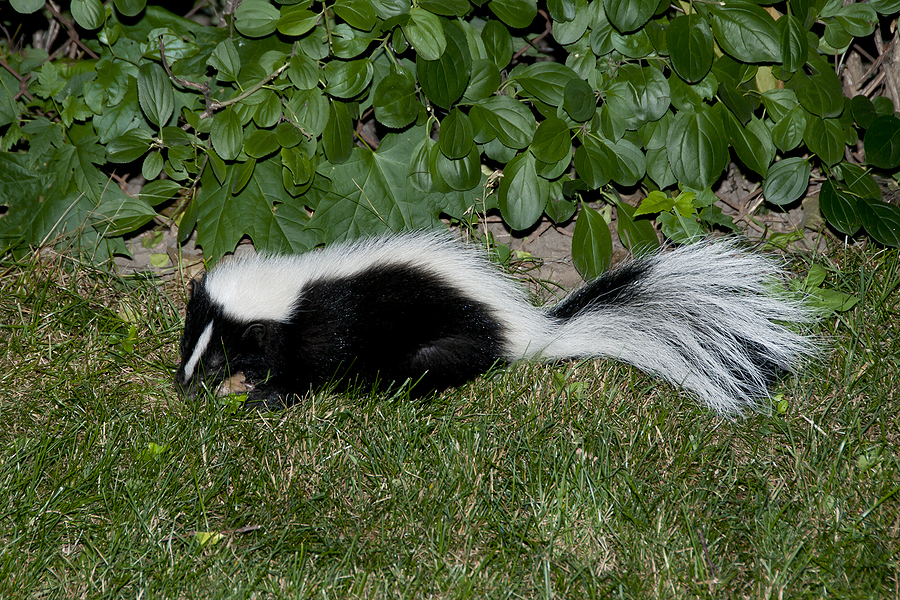
Spotting a skunk wandering through your yard can be alarming. These nocturnal creatures are famous for their pungent spray, but they also carry a much more serious health threat to your family and pets. Skunks are one of the primary carriers of the rabies virus in North America.
Protecting your loved ones requires knowing exactly what to look for and how to react. A little bit of knowledge goes a long way in preventing dangerous encounters. This guide will help you identify skunk activity, recognize the warning signs of rabies, and take the right steps to keep your home safe.
How to Identify and Prevent Skunks in Your Backyard
Before you can protect your property from wildlife, you need to know if you actually have a skunk problem. Skunks are opportunistic foragers. They will gladly settle down in your yard if it offers easy meals and safe hiding spots.
Recognizing skunk activity
The most obvious sign of a skunk is the lingering, musky odor they leave behind. Even if a skunk hasn’t sprayed recently, their natural body scent is often detectable. You might also notice small, shallow holes in your lawn. Skunks dig these distinct, cone-shaped holes while searching for grubs and insects.
Pay close attention to the spaces under your deck, shed, or woodpile. These dark, enclosed areas provide the perfect shelter for a skunk looking to build a den.
What is Rabies and How does it Spread?
Rabies is a severe viral disease that affects the central nervous system of mammals. If left untreated, it is almost always fatal. Knowing how the virus operates is crucial for keeping your family and pets safe.
How rabies affects humans and animals
The rabies virus is transmitted through direct contact with the saliva or brain tissue of an infected animal. This typically happens through a bite or a deep scratch. Once the virus enters the body, it travels along the nerves toward the brain. Skunks, bats, and raccoons are among the most common wildlife carriers in the United States.
Symptoms of rabies in animals
A rabid animal often behaves very differently from a healthy one. You might notice unusual aggression, or conversely, a complete lack of fear toward humans. Disorientation, staggering, and trouble walking are also common warning signs.
Physical symptoms can include excessive drooling or foaming at the mouth, leading to eventual paralysis. While skunks are generally active at night, seeing a skunk during the day does not automatically mean it is rabid. However, a daytime skunk that appears sick, lethargic, or overly aggressive should be avoided at all costs.
What to Do During a Skunk Encounter
Skunks have poor eyesight. They often wander into the paths of humans and pets simply by accident. Knowing how to handle these sudden encounters can prevent a bad situation from turning worse.
If you spot a skunk nearby
Stay calm and maintain your distance. Skunks only spray when they feel threatened or cornered. Slowly back away and give the animal plenty of room to escape. If you are walking your dog, immediately tighten the leash and guide your pet indoors.
If your pet gets sprayed by a skunk
A skunk’s spray is incredibly foul, but it is not physically harmful beyond causing temporary eye irritation and nausea. If your pet gets sprayed, keep them outside to prevent the oils from soaking into your furniture.
You can neutralize skunk spray odor using a simple homemade deskunking recipe. Mix one quart of 3% hydrogen peroxide, one-fourth cup of baking soda, and one teaspoon of liquid dish soap. Apply this mixture directly to your pet’s dry coat, avoiding their eyes and ears. Let it sit for five minutes, then rinse thoroughly with warm water. Discard any leftover mixture immediately, as it can expand and burst if stored in a closed container.
If a skunk bites or scratches your pet
A bite or scratch from a skunk is a medical emergency due to the risk of rabies. Put on thick gloves to protect yourself, and immediately wash your pet’s wound with warm water and soap. Contact your veterinarian right away. Even if your pet is up to date on their vaccinations, they will likely need a booster shot and a period of close observation.
Human Exposure to Rabies Requires Immediate Action
If you or a family member are bitten or scratched by a skunk, time is of the essence. Swift medical intervention is highly effective at preventing the virus from taking hold.
First steps after a bite or scratch
Immediately wash the wound aggressively with soap and water for at least 15 minutes. This simple step greatly reduces the amount of virus present in the area. Once the wound is clean, seek medical attention without delay.
Healthcare professionals will likely recommend post-exposure prophylaxis (PEP). This treatment consists of a dose of human rabies immune globulin and a series of rabies vaccines given over a few weeks. When administered promptly, PEP is nearly 100% effective at preventing the disease.
Recognizing early rabies symptoms
If rabies PEP is not administered in time, the virus will begin to multiply. Early symptoms in humans closely resemble the flu. You might experience a fever, headache, and general weakness. Many people also report a prickling or itching sensation at the site of the bite. Once clinical signs of rabies appear, the disease progresses rapidly and is almost uniformly fatal. This makes immediate preventative treatment absolutely vital.
Prevention is Your Best Defense Against Wildlife
You cannot control wild animals, but you can control how well-prepared your household is. Taking proactive measures will severely limit the risks associated with skunks and rabies.
Keep pet vaccinations up to date
Your pets are your family’s first line of defense against rabid wildlife. Keeping your dogs, cats, and ferrets up to date on their rabies vaccinations is the single most important step you can take. In most jurisdictions, regular rabies vaccines are a strict legal requirement.
Keep skunks away from your property
The most effective way to get rid of skunks is to remove whatever is attracting them in the first place. Secure all potential food sources. Feed your pets indoors, and make sure your outside trash cans have tight-fitting, animal-proof lids.
Next, eliminate appealing habitats. Use wire mesh to seal off the gaps beneath your porch, deck, and sheds. Clear away dense brush and debris piles where skunks might hide. You can also use humane deterrents, such as motion-activated floodlights or sprinklers, to startle them away from your yard at night.
Educate your children about wildlife safety
Children are naturally curious and might try to approach a wandering skunk. Teach your kids a strict “look, don’t touch” rule when it comes to any wild or unfamiliar animal. Explain that wildlife should always be enjoyed from a safe distance, and they should immediately tell an adult if they see a wild animal in the yard.
FAQ’s about Skunks and Rabies
Can a skunk spray rabies?
No. The rabies virus is exclusively transmitted through direct contact with the saliva or brain tissue of an infected animal. It cannot be transmitted through a skunk’s spray, blood, urine, or feces.
How far can a skunk spray?
Skunks are incredibly accurate and can spray their noxious fluid up to 10 to 15 feet. They will usually stamp their front feet and raise their tail as a warning before releasing their spray.
What should I do if I find a dead skunk?
Do not touch a dead skunk with your bare hands. The rabies virus can survive in a dead animal’s tissue for a short period. Contact your local animal control agency or a professional wildlife removal service to dispose of the body safely.
Are all skunks rabid?
No, not all skunks carry rabies. However, because they are a primary vector for the disease in North America, you should always treat any skunk encounter with a high level of caution.
Staying Safe from Skunks
Coexisting with wildlife requires respect and caution. By securing your yard, keeping your pets vaccinated, and knowing exactly how to react during an encounter, you can keep your home safe from the threats skunks pose. Always prioritize your family’s health and never hesitate to call on professional help when a wild animal gets a little too close for comfort.
For effective skunk control service in Indianapolis, Indiana, Modern Wildlife Control provides free quotes—request one today!
Related Post: Safe and Humane Skunk Control Methods