
TL;DR: Beavers and woodchucks differ significantly in appearance, size, habitat, social behavior, and activity patterns. Beavers are larger, have flat, scaly tails, and live in water, often in family colonies, primarily active at night. Woodchucks are smaller, have short, furry tails, and live on land in solitary burrows, active during the day. For managing woodchuck burrows, professional removal is typically the best approach.
Key Takeaways:
- Woodchucks are land-dwelling, beavers are semi-aquatic.
- Woodchucks eat plants, beavers eat wood and aquatic plants.
- Woodchucks have smaller bodies than beavers.
Table of Contents:
- Introduction
- What is a Woodchuck?
- What is a Beaver?
- Woodchuck vs. Beaver: Key Differences
- Frequently Asked Questions (FAQ)
- Quick Recap
- Conclusion
- Professional Woodchuck Control Service
Imagine, if you will, the animal kingdom as a high school cafeteria. In one corner, you have the architecture club president—always busy, obsessively organizing materials, and practically living in the school’s swimming pool. That’s the beaver. In the other corner, you have the solitary kid who skips gym class to nap under the bleachers and snacks constantly on the salad bar. That’s the woodchuck. While they might look like distant cousins at a family reunion—both being chunky, furry rodents with serious teeth—their lifestyles couldn’t be more different.
Confusing a woodchuck (also known as a groundhog) with a beaver is a common mistake. They are both large, brownish rodents found throughout North America, and spotting one scurrying across a field or swimming in a pond can easily lead to misidentification. However, understanding the distinctions between these two species is not just about winning trivia night; it’s about understanding the wildlife in your backyard and how they interact with your property.
In this guide, we will dissect the key differences between woodchucks and beavers, from their physical traits to their unique habitats, ensuring you never mistake the architect for the napper again.
What is a Woodchuck?
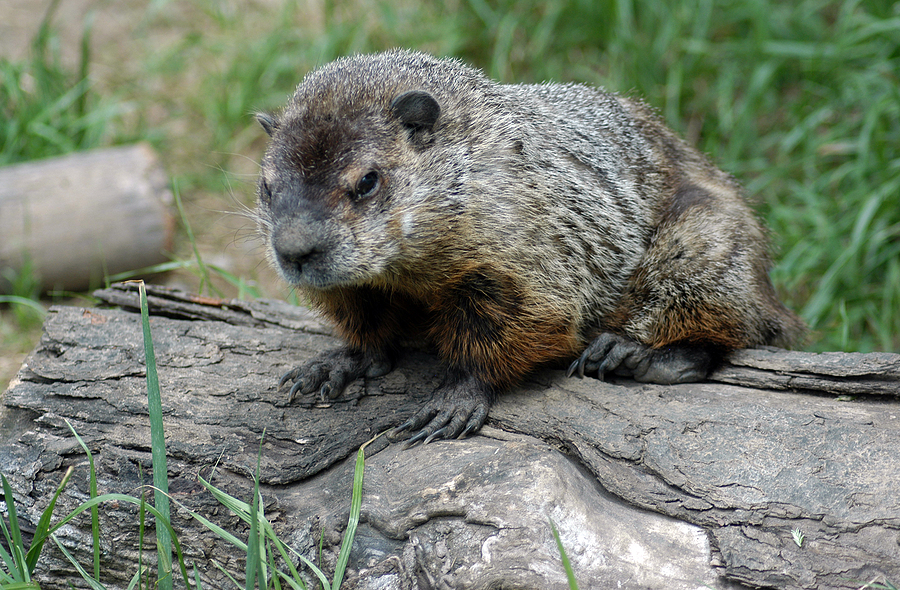
The woodchuck (Marmota monax), widely recognized by its alias, the groundhog (or even “whistle pig”), is essentially a large ground squirrel. Belonging to the Sciuridae family, they are one of the few mammals that enter true hibernation, disappearing into their burrows from late October until early spring.
Appearance and Physical Traits
Woodchucks are built for digging. They possess a compact, chunky body supported by short, powerful legs and curved claws ideal for excavating complex burrow systems. An adult woodchuck typically measures between 16 and 27 inches in length and weighs anywhere from 5 to 10 pounds. Their fur typically has a “frosted” appearance due to the mix of brown, gray, and black hairs. Unlike their aquatic counterparts, woodchucks have a short, fluffy tail—usually only 4 to 7 inches long—that looks somewhat like a squirrel’s tail but much less bushy.
Habitat and Lifestyle
True to their name, woodchucks are terrestrial creatures. They prefer open farmlands, fields, and edges of woodlands where they can dig deep burrows. These burrows are engineering marvels in their own right, often featuring multiple entrances, a main nesting chamber, and separate “toilet” chambers to keep the living quarters clean. While they are capable swimmers and climbers, they spend the vast majority of their time on dry land.
What is a Beaver?
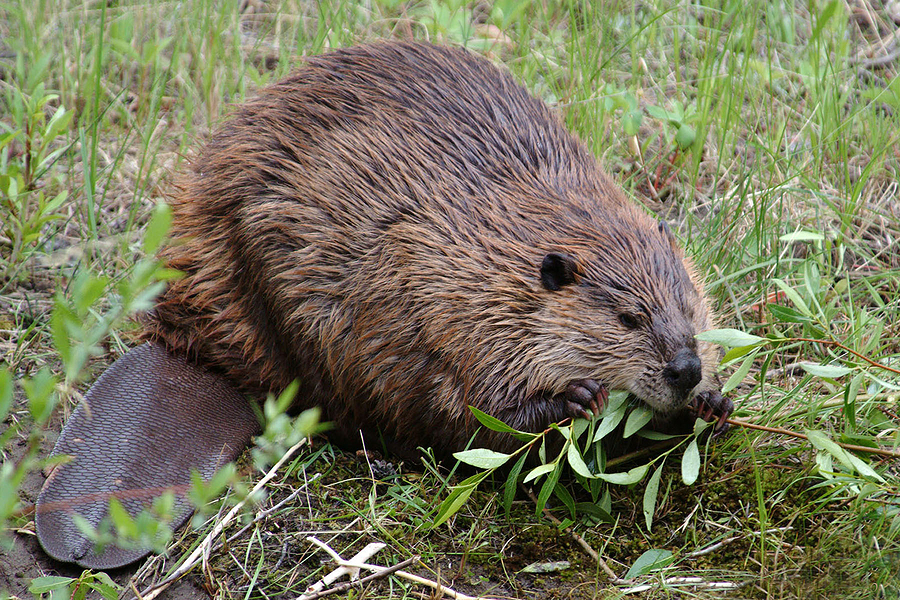
The beaver (Castor canadensis) holds the title of North America’s largest rodent. They are semi-aquatic mammals renowned for their ability to alter their environment to suit their needs, second only to humans in their capacity to modify landscapes.
Appearance and Physical Traits
Beavers are significantly larger than woodchucks. An adult beaver can grow up to 4 feet long (including the tail) and typically weighs between 40 and 70 pounds—though some well-fed individuals can tip the scales at nearly 100 pounds. Their most distinctive feature is their tail: a broad, flat, black paddle that is hairless and scaly. This tail serves as a rudder while swimming and a kickstand while chewing down trees. They also possess webbed hind feet and a dense, waterproof coat that keeps them warm and dry even in freezing water.
Habitat and Lifestyle
Beavers are inextricably linked to water. They require a water depth of at least 2 to 3 feet to protect themselves from predators and to transport heavy logs. If the water isn’t deep enough, they build dams to create ponds. Their homes, called lodges, are constructed from sticks and mud in the middle of these ponds or dug into riverbanks, with underwater entrances that make them fortress-like against land predators.
Woodchuck vs. Beaver: Key Differences
While they may look similar from a distance, placing these two side-by-side reveals distinct differences in biology and behavior.
Physical Appearance
The quickest way to tell them apart is the tail. If you see a long, flat, paddle-like tail, you are looking at a beaver. If the tail is short, furry, and somewhat stubby, it’s a woodchuck. Additionally, beavers are much heavier and larger overall. A woodchuck might look like a heavy cat, whereas a beaver is more akin to a medium-sized dog in weight.
Habitat and Distribution
Location is a major clue. Woodchucks are landlubbers found in dry fields, along roadsides, and under sheds or decks. They avoid water unless necessary. Beavers, conversely, are rarely found far from a water source. If you see a large rodent swimming effortlessly across a pond or river, it is almost certainly a beaver. While woodchucks are solitary creatures (except when raising young), beavers live in family colonies consisting of a monogamous pair and their offspring.
Diet and Eating Habits
Both animals are herbivores, but their menus differ.
- Woodchucks: These are the bane of many gardeners. They graze on succulent green plants like clover, alfalfa, dandelion, and—much to the frustration of homeowners—vegetables like peas, beans, and lettuce.
- Beavers: Their diet is heavier and woodier. They consume the inner bark (cambium) of trees, as well as twigs and leaves. Favorites include willow, maple, birch, and aspen. They also eat aquatic vegetation like water lilies.
Behavior and Activity
Woodchucks are diurnal, meaning they are active during the day, particularly early morning and late afternoon. You will often see them basking in the sun near their burrow entrance. Beavers are primarily nocturnal or crepuscular (active at dawn and dusk), making them harder to spot during broad daylight.
Impact on the Environment
The environmental footprint of these two species is distinct. Woodchucks impact the land through extensive burrowing, which can aerate the soil but also pose risks to farm equipment and building foundations. Beavers, as “ecosystem engineers,” create entirely new wetland habitats by damming streams. While this provides homes for fish, birds, and amphibians, it can also cause flooding that damages roads, timber, and agricultural land.
Frequently Asked Questions (FAQ)
Is a woodchuck a rodent?
Yes, the woodchuck is a rodent. It belongs to the family Sciuridae, which includes squirrels, chipmunks, and prairie dogs.
Do beavers live in groups?
Yes. Unlike the solitary woodchuck, beavers are social animals that live in colonies. A colony typically consists of a breeding pair and their offspring from the previous two years. Young beavers usually stay with their parents for about two years before setting off on their own.
What should I do if I find a woodchuck on my property?
If a woodchuck is damaging your garden or threatening your foundation, control is often necessary. Habitat modification, such as fencing gardens (burying the fence at least 12 inches deep to prevent digging), can help. However, because woodchuck burrows can be complex and extensive, professional wildlife removal is often the safest and most effective solution.
Quick Recap:
- Tail: Beaver = Flat and scaly. Woodchuck = Short and furry.
- Size: Beaver = Large (40–70 lbs). Woodchuck = Medium (5–10 lbs).
- Home: Beaver = Water (lodges/dams). Woodchuck = Land (burrows).
- Social Life: Beaver = Family colonies. Woodchuck = Solitary.
- Activity: Beaver = Night/Dusk. Woodchuck = Day.
Managing Wildlife on Your Property
Understanding the difference between a woodchuck and a beaver is the first step in managing your property effectively. While both animals play important roles in our ecosystem, their activities can sometimes conflict with human interests, leading to damaged crops, flooded yards, or compromised structures.
Whether you are dealing with a burrow under your barn or a dam blocking your creek, it is crucial to approach the situation with care and respect for the animal. In many states, including Indiana, there are specific regulations regarding the trapping and removal of nuisance wildlife. For example, it is often illegal to trap and relocate a beaver to a different property, as this simply transfers the problem to someone else.
If you are facing a wildlife conflict that feels out of hand, don’t try to tackle it alone. Professional guidance ensures that the removal is handled humanely, legally, and effectively. For professional woodchuck removal and control in Indianapolis and surrounding counties, contact us today!
Related Post: Effective Groundhog Control Solutions for Farmers in Indiana