It’s a smell that is unmistakably potent and dreadfully persistent. If you or your pet have had the misfortune of encountering a skunk, you know the panic that sets in immediately after the spray. The odor is not just unpleasant; it is overwhelming, watering your eyes and clinging to everything it touches.
A skunk encounter is a stressful event for any homeowner or pet parent. The immediate instinct is often to wash everything with water, but with skunk spray, standard cleaning methods often fall short. Because the spray is oil-based, it resists simple rinsing and can linger for weeks if not treated correctly.
While the situation feels dire in the moment, it is manageable with the right chemistry and techniques. By understanding what you are dealing with and acting quickly, you can neutralize the odor and restore normalcy to your home and wardrobe. This guide covers everything you need to know about effectively removing skunk scent from clothes, pets, and your property.
Understanding the Chemistry of Skunk Spray
To effectively fight the smell, you must first understand what makes it so difficult to remove. Skunk spray is a defensive weapon produced by the animal’s anal glands. This yellow-tinted oil contains a mixture of sulfur-containing chemicals called thiols.
Thiols are the same compounds found in decomposing flesh and rotten eggs, which explains the nausea-inducing nature of the scent. However, the problem goes deeper than just the smell. Because the spray is an oil, it clings stubbornly to skin, fur, and fabrics. It does not mix with water, meaning a simple hose-down can actually spread the oil rather than remove it.
Furthermore, skunk spray contains thioacetates. These compounds are initially odorless but slowly break down into thiols when exposed to water or humidity. This is why a dog might smell fine after a bath, only to smell like a skunk again the next time it rains. To truly eliminate the odor, you must chemically alter the thiols so they no longer produce a scent, rather than simply masking them with perfumes.
How to Save Your Clothes from the Stench
When skunk spray hits clothing, time is of the essence. The longer the oils sit on the fabric, the harder they are to remove. However, simply throwing your clothes in the washing machine is a mistake that could contaminate your washer and the rest of your laundry.
Is the clothing washable?
First, check the care label. If the item is “dry clean only,” take it to a professional cleaner immediately. Be honest with them about the source of the stain so they can use the appropriate treatment. For machine-washable fabrics, follow these steps:
Step 1: Air it out
Do not bring the clothes inside immediately if you can avoid it. Leave them outside in the sun and fresh air. Ultraviolet rays and oxygen help break down the odor-causing compounds.
Step 2: The pre-soak
Before washing, you need to break down the oils. Soaking the clothes in a solution of baking soda and hot water can be effective. For sturdier fabrics, a vinegar solution (one part vinegar to four parts water) can also help cut through the oil. Let the clothes soak for at least 30 minutes.
Note: Be cautious with bleach or hydrogen peroxide on colored fabrics, as these can cause discoloration.
Step 3: High-temperature wash
Wash the clothes using your regular heavy-duty detergent. If the fabric allows, use the hottest water setting possible, as heat helps liquify and release the oils. You may need to repeat the wash cycle two or three times.
Step 4: Air dry again
Do not put the clothes in the dryer until you are absolutely certain the smell is gone. The high heat of a dryer can bake the oil into the fibers, making the smell permanent. Line dry the clothes and give them the “sniff test” once dry.
Request Skunk Removal and Control Service in Indy ✅
Deodorizing Your Pets Safely
Our curious pets are often the primary victims of skunk sprays. A sprayed dog or cat is distressed, and they will likely try to rub the oil off on your carpet or furniture. Move them outside immediately to prevent the smell from entering your home.
The Tomato Juice Myth
For decades, popular culture has suggested bathing a skunked pet in tomato juice. While the acidity in tomatoes can cut through some oils, it typically does not neutralize the thiols. It often results in “olfactory fatigue,” where the strong smell of tomatoes merely overpowers your nose temporarily, tricking you into thinking the skunk smell is gone. In reality, you likely end up with a dog that smells like skunk and tomato soup.
The Proven Solution
The most effective remedy is a homemade solution that chemically neutralizes the odor through oxidation. You will need:
- 1 quart of 3% hydrogen peroxide
- ¼ cup of baking soda
- 1 teaspoon of liquid dish soap (grease-cutting soap works best)
Instructions:
- Mix fresh: Combine the ingredients in an open container (bucket or bowl). Do not put a lid on it, as the chemical reaction releases gas and could cause a closed container to burst.
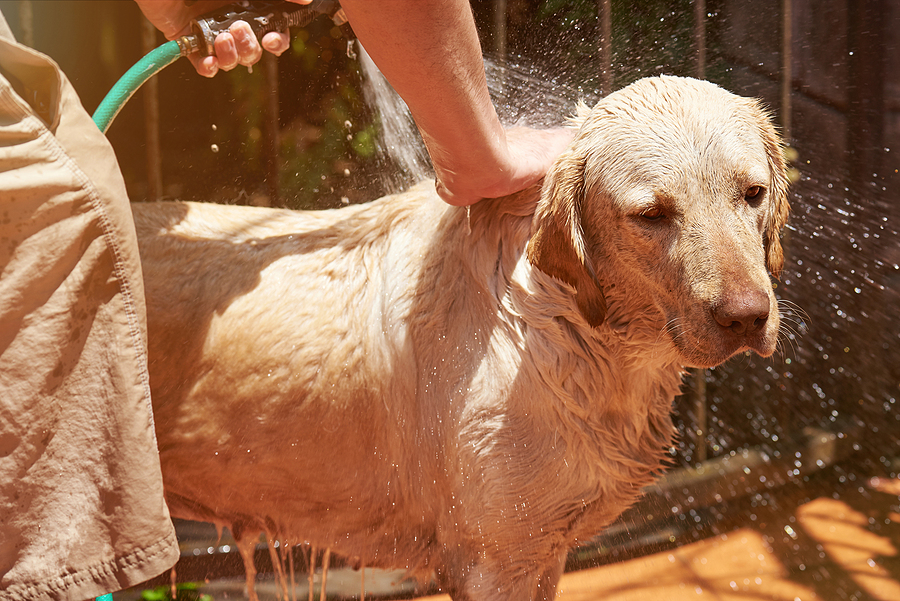
- Apply to dry coat: Wearing rubber gloves, apply the foaming mixture to your pet’s dry fur. Do not wet the pet first. Work the solution deep into the fur, focusing on the area where they were sprayed.
- Avoid delicate areas: Be extremely careful around the eyes, nose, and mouth. The solution can sting. If the spray is on the face, use a washcloth to carefully wipe the fur.
- Let it sit: Allow the solution to remain on the fur for about five minutes. You may notice the odor disappearing rapidly.
- Rinse and repeat: Rinse the pet thoroughly with tepid water. If the smell persists, repeat the process.
- Final wash: Follow up with a standard pet shampoo to remove any residue and condition the fur.
Cleaning Indoor and Outdoor Surfaces
If the spray occurred near your house, or if a sprayed pet ran inside, you may need to decontaminate your home.
Hard Surfaces (Floors, Decks, Walls)
For outdoor decks or concrete, a diluted bleach solution (1 part bleach to 9 parts water) is highly effective. However, bleach can damage wood stains and kill grass, so use it with caution and rinse thoroughly.
For indoor hard surfaces, use a mixture of vinegar and water. The acidity helps cut the oil. Scrub the area and wipe it clean. Open all windows to encourage ventilation.
Carpet and Upholstery
Steam cleaning is often the best option for carpets, as the heat helps lift the oils. If you don’t have a steam cleaner, you can spot-treat with the hydrogen peroxide and baking soda mixture mentioned above. However, always test a hidden area first to ensure it doesn’t bleach the fabric.
Place bowls of vinegar around the room to absorb lingering ambient odors in the air, and change your HVAC filters, as the oily scent can get trapped in the ventilation system.
Prevention: Keeping Skunks at Bay
The best way to handle skunk odor is to avoid it entirely. Skunks are generally docile and prefer to avoid conflict, spraying only when they feel threatened or cornered. By making your property less attractive to them, you can reduce the likelihood of an encounter.
- Secure Food Sources: Skunks are opportunistic feeders. Secure garbage can lids with bungee cords or weights. Do not leave pet food outside overnight, and clean up fallen fruit from trees.
- Eliminate Hiding Spots: Skunks look for dark, quiet places to den. Seal off access to crawl spaces, areas under decks, and sheds using heavy-gauge wire mesh.
- Install Lighting: Skunks are nocturnal and prefer darkness. Motion-sensor floodlights can deter them from entering your yard at night.
Dealing with a Persistent Skunk Problem
Sometimes, despite your best prevention efforts, skunks may decide to make your property their home. If you notice recurring smells or frequent sightings, you may have a den on your property. Attempting to remove a skunk yourself is risky and often leads to the very spraying incident you are trying to avoid.
In these situations, it is best to contact a professional wildlife removal and control company. These experts are equipped with the knowledge and tools to handle nuisance skunks safely and humanely, ensuring their effective removal without causing them harm or provoking a spray. They can also offer more permanent solutions to prevent future infestations.
Restoring Freshness to Your Life
Dealing with skunk spray is a rite of passage for many homeowners, but it doesn’t have to be a disaster. The key is understanding that you are fighting a chemical battle against resilient oils. By skipping the tomato juice and reaching for the hydrogen peroxide and baking soda, you can neutralize the odor at the source.
Patience is vital. You may catch faint whiffs of the scent for a few days as the final molecules break down, but by following these steps, you can save your clothes, comfort your pets, and breathe freely in your own home once again.
If you are located in the Indianapolis area and are dealing with nuisance animals, it is safer to rely on experts who can handle the removal humanely and effectively. Contact our professional wildlife control service in Indianapolis to assess your property and provide a long-term solution to your skunk problem.
Related Post: Safe and Humane Skunk Control Methods